

Miriam Pataki explains how natural co-sleeping is
Eight years ago, Sophia was a few hours old and the maternity nurse said she really HAD to be in her own bed
I was a bit startled by this and we immediately laid her in bed with us as soon as the front door closed. Actually, she never left there, just kidding of course. Sophia only really slept on top of me during the day. In hindsight, a baby carrier would have been very nice, but I didn't have one yet, so I often 'tied' her in my bathrobe. In the playpen, she would scream her head off and clearly had a severe case of skin hunger. I ignored all the well-intentioned advice and started to cater to her needs. Wow, what a relief when I did that. I no longer constantly felt the rush that she had to be in her bed within a certain time or needed to be fed every so many hours. This gave me so much peace. I hardly told anyone about this, because they would think I was crazy: 'But girl, what about you?' Well, what about me? 'That will come back,' I thought. My baby needed me. She just wanted to lie comfortably with me, why not? She was only small for such a short time. So, so short. She slept wonderfully against me at night and we both really enjoyed this.
Two years and 9 months later, her little sister Lilly was born
So yes, if you have a baby sleeping in your bed, you still do 'things' together. There are, after all, multiple places in the house. Lilly was actually a similar kind of baby, you know, one of those who only wants to be with her mother. So even then, I did it again. Lilly was dragged around more, because Sophia was in toddler gymnastics. By then I had my driver's license, so I also went out more often to visit friends. Lilly adapted to me and I to her. She always slept with me in the baby carrier during the day and clung to me at night. I knew no better and it worked best for her too. Friends in my area did sleep training and that sort of thing. I simply didn't find it necessary in my situation, but I did notice that they felt the need to push that on me as well. I found that annoying. But I also understand that if you're going back to work full-time and your baby has to go to daycare, you almost have no other choice. This seems very difficult to me. That's why I still find it ridiculous that you have to go back to work so soon in the Netherlands, but that's another discussion. Sophia and Lilly both started sleeping in their own beds when Lilly was two years old. The girls just found it very cozy together. I also never spent hours putting the children to bed because they fell asleep immediately. With a few exceptions, of course. And so what! She's not going to breastfeed or sleep in our bed until she's sixteen. They are really only small for a short time. In a few years, you'll miss those little bodies against you and regret not holding them a little longer, as they hop on the back of a scooter with a boy and stay out way too long. So.
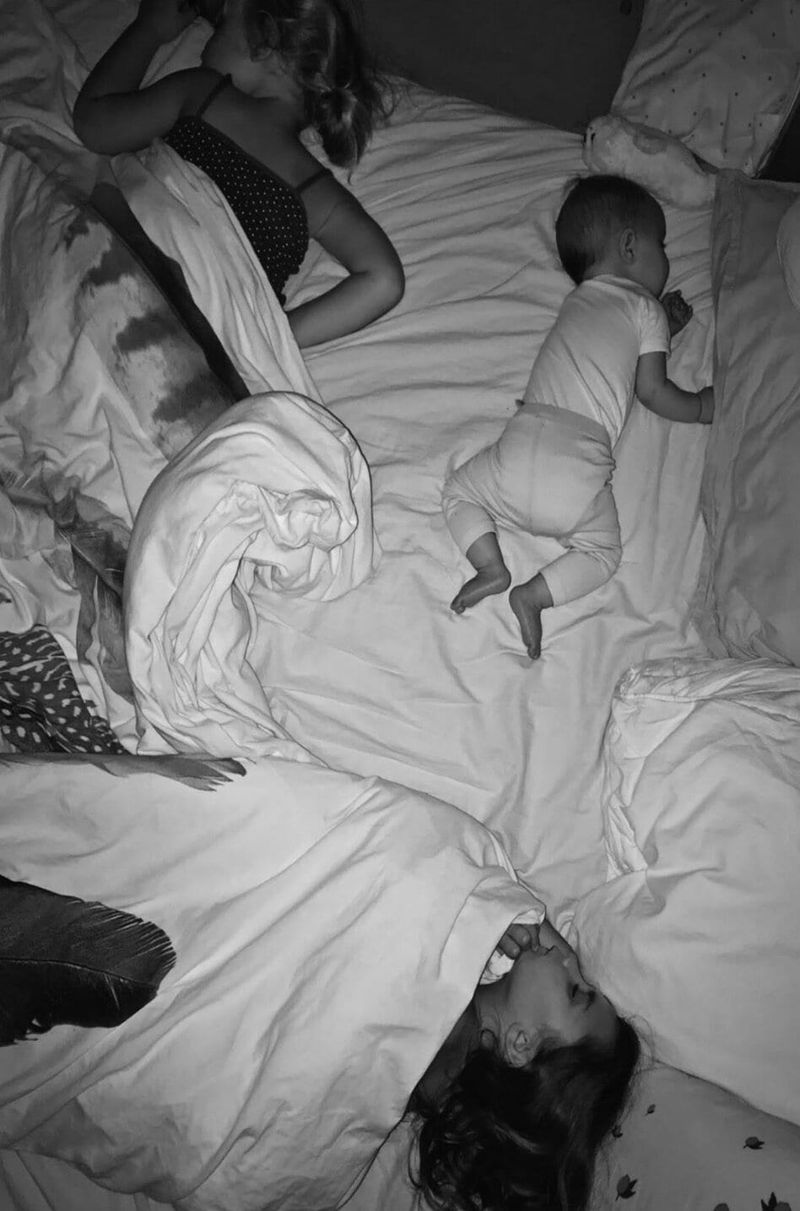
Every child will be ready to sleep in their own bed at a different age
We have made a rule that they can choose one day a week to fall asleep with us, then we make it a kind of party. We then take them to their own beds later, or actually now to Sophia's bed, because that's where they are currently sleeping together. Isn't it just much cozier together? Most adults also prefer not to sleep alone, so why do we expect that from our babies?
I never let them cry either
I won't do it. It doesn't feel right and goes against all my principles. But remember, that doesn't mean they don't cry! Of course they cry, but then I comfort them, hold them in my arms. It's just that I don't leave them crying continuously in another room, all alone. If you do that, fine.
Also
When Amélie was born, I wanted a bit more freedom
I did everything myself with Sophia and Lilly, not because Bernard didn't want to, but with him it took longer before they calmed down, whereas with me it was immediate. He didn't have breasts, after all... Now, I had resolved to get her used to him right from the start, so he could also give her the bottle and rock her to sleep, and that was a damn smart choice. I can now simply go out in the evening, and that does make me a much more pleasant mother. So for all the insecure mothers who think they are doing it wrong: you're doing fine! Don't go against your own instincts just because your neighbor, friend, aunt, or mother says so. Do what's best for you, because only you know deep down what your child needs.
11 November 2014
I was heavily pregnant with Lilly and found this beautiful text, I saved it and still read it from time to time. It gives me so much peace. A feeling that we mothers are indeed doing it right the way we do it. That it's not all as easy as it seems in a book, but that nature takes care of it.
Within the group of mammals, there are Runners, Hiders, and Carriers
Babies of Runners are born more or less 'complete'
Think of horses, cows, deer: they are born, licked clean, and within half an hour after birth, they can already stand and walk. This is their way of protecting the vulnerable young from predators. The milk of these animals is particularly rich in protein, so that muscles and bones are built up quickly.
Hiders lay their young in a nest
They come several times a day to feed them and spend the rest of the time hunting for food. Take cats, for example. The milk of hiders contains a lot of fat to keep the young satisfied for long periods. The young of hiders stay quiet when the mother is not around, so they are not discovered by predators.
The babies of Carriers are born more or less 'unfinished' and helpless
and are dependent on their parents for their safety and care. This includes almost all primates, and thus humans as well. The milk of carriers contains mainly carbohydrates to quickly mature the brain, but the offspring remain physically helpless for a long time. If they are left alone, they are vulnerable to predators, and they will also sound the alarm (=cry) to ensure that their mother, whom they have lost, can find them as quickly as possible. Their defense against danger must come from the mother, and she 'should' also be continuously nearby.
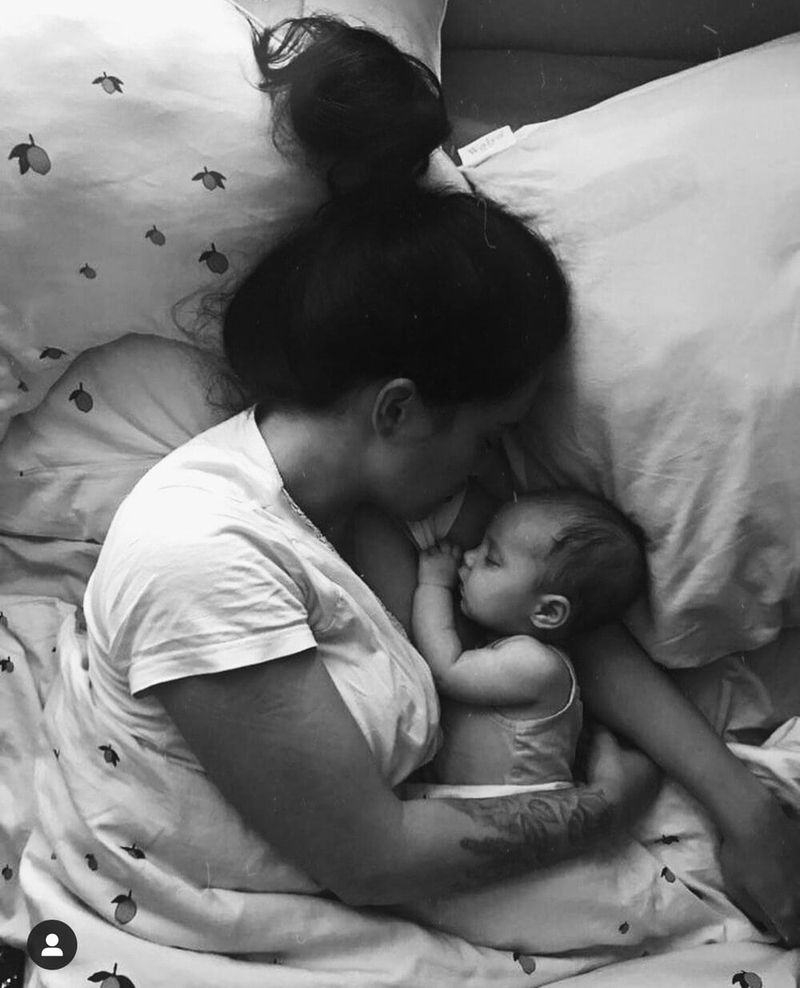
Humans are clearly among the carriers
(for example, consider the composition of milk). But we often behave like hiders: we put the baby in a separate crib in another room, and we expect him to stay quiet for a few hours. We know that there are no predators here and that the baby is safe in his own crib... But the baby doesn't know that! A baby is a bundle of impulses, reflexes, and instincts. The fact that we haven't had predators in our environment for the last few centuries is something a baby cannot know. The moment he is 'safely' in his crib, something is completely wrong for him: his mother is not there to protect him, and so he is unsafe! Big Alarm! Mommy, where are you?... Someone who practices Natural Parenting will never let a baby cry for long. The child is sounding the alarm, and to ensure that it gains trust in the parents, they respond to the alarm. They know that a baby instinctively wants to be with its parents. This is not manipulation. Babies are not yet capable of that. The sadness and fear of a baby who is alone are completely genuine. When you let a baby cry, he will eventually become quiet. He hasn't 'learned' to sleep in his own crib, he has given up calling for his parents...
Research shows that the cortisol levels of babies who cry loudly are high
even after they have fallen asleep. Cortisol is a stress hormone that inhibits growth. Holding a baby and skin-to-skin contact actually lead to the release of oxytocin, the bonding hormone that promotes healthy cell growth and relaxation. Therefore, a baby prefers to be with their caregivers all day long. However, a baby is also very sensitive to stimuli. The television, vacuum cleaner, telephone, radio... All these are stimuli that can sometimes become too much for a baby. That's why there are people who advocate for the old adage of Rest (Cleanliness) and Regularity (also known as RVP: Rest, Predictability, and Stimulus Reduction). Now, there is nothing wrong with protecting your child from an excess of stimuli. Turning off the TV or lowering the volume, and moving more quietly around the house, is actually a natural response and nothing but logical. But many proponents go too far in the doctrine of RRR/RVP. They believe that a baby should be fed at fixed times, swaddled as a standard practice, and sleep in a quiet, dark room. This is not a natural state of affairs. While predictability is a blessing for many children, it doesn't require the involvement of a clock. Simply performing the activities of the day in a fixed order is sufficient, and a child can very well indicate when they need a sip of breast milk. Swaddling may be a solution for some children, but standard swaddling can be harmful to breastfeeding (because swaddled children often no longer indicate that they want to drink, while breastfeeding operates on a supply-and-demand principle).
MIRIAM