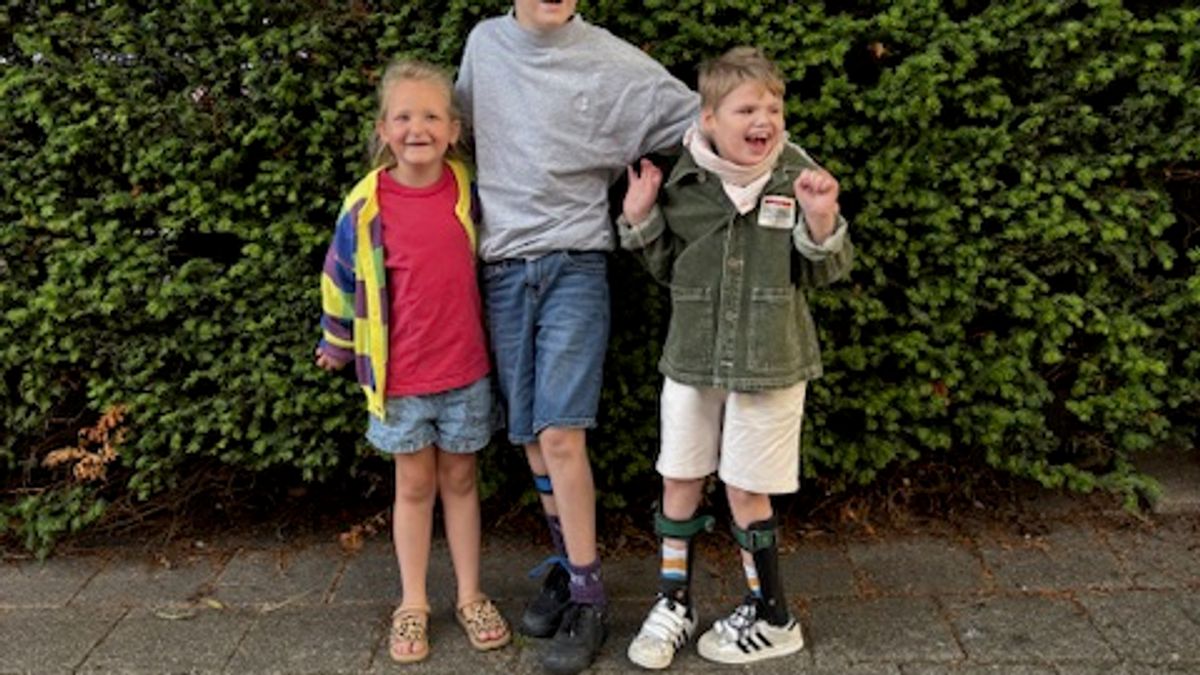
Tessa is a care parent: “Three children, two rare diseases. Our days are filled with care, uncertainty, limitations, and living loss..”
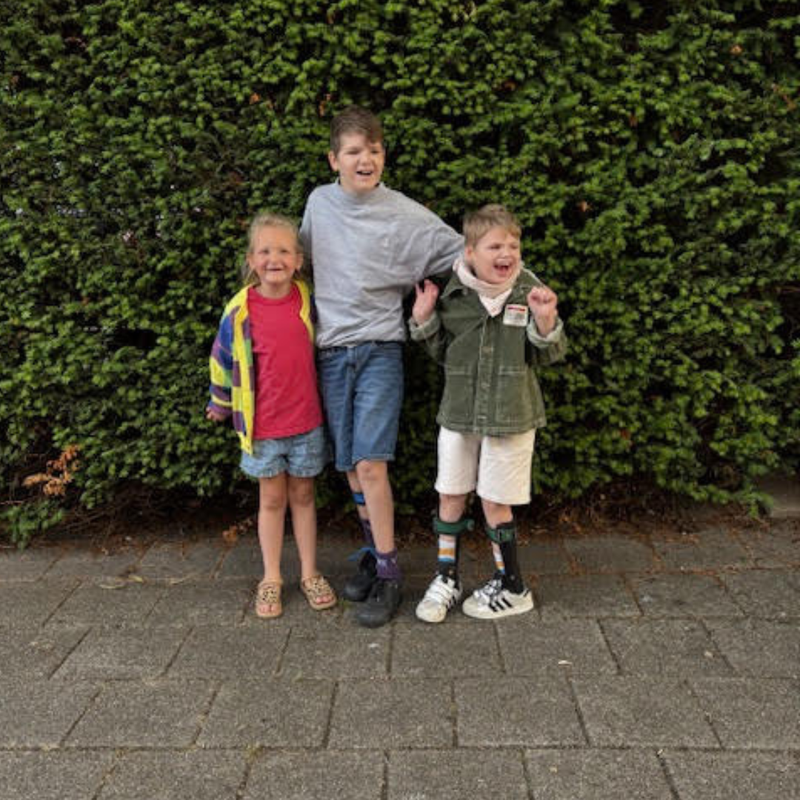
I am a foster parent. Two of our children (Felix and Marly) have Shwachman-Diamond Syndrome (SDS), and in addition, two children (Felix and Fabe) have Moyamoya Syndrome. These rare diseases are probably unfamiliar to you, so I will take you through their meaning and how they affect our daily lives. My name is Tessa and I am married to Bart. Together we have three beautiful children: Felix (11 years old), Fabe (8 years old), and Marly (7 years old).
Two rare diseases with risks and consequences
Shwachman-Diamond Syndrome (SDS) is a rare hereditary disorder where the bone marrow and pancreas do not function properly. This means that children are more susceptible to infections and may have problems with digestion, leading to poor growth. Additionally, it is known that these children often struggle with learning and have delays in psychomotor development (which is the development of the connection between a child's mental and motor functions).
Moyamoya Syndrome is a condition where the blood vessels in the brain narrow for unknown reasons. As a result, the body starts to create small, new blood vessels. These appear on scans like a puff of smoke, which is where the name 'Moyamoya' comes from, Japanese for 'puff of smoke'. The consequences of this disease are severe: it poses risks of TIAs or infarcts.
Multiple cerebral infarctions, physical disabilities, tube feeding, and epilepsy
And those risks became reality. Felix and Fabe both have Moyamoya syndrome and have therefore both experienced multiple cerebral infarctions from the age of four. As a result of these infarctions, both boys have physical disabilities: Felix can no longer use his right hand and wears a leg brace to walk more stably and better, Fabe has become limited in both hands and wears two leg braces to walk more stably and better. Furthermore, Fabe is non-verbal (he cannot speak) and is completely dependent on tube feeding. Since 2022, Fabe also lives with difficult-to-control epilepsy. This means that in addition to the uncertainty of the disease, there is an extra uncertainty, as the seizures are frequent and occur throughout the day.
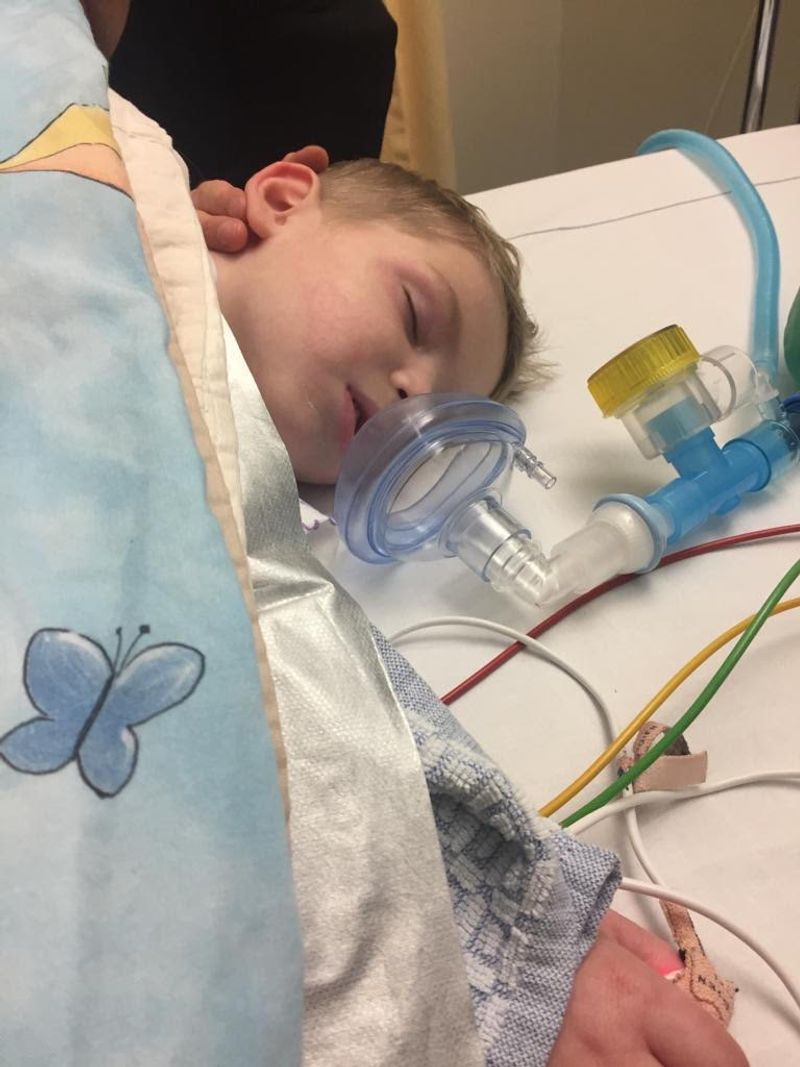
If this happens, his world will change so drastically
The worries are immense, as Fabe's illness is not stable. In December 2024, Fabe suffered his fifth stroke. This stroke caused him to lose half of his field of vision, and it will not return. The images from the scan also made it clear that on the other side of his brain hemisphere, the blood vessels are narrowing more and more, which means that it's only a matter of time before a new stroke will occur. This thought is terrifying, because even though we have experienced this so many times, it never gets any easier. The idea that Fabe might then lose his entire field of vision is very hard for me. I wish my little big friend the world, and if this happens, his world will change so drastically.
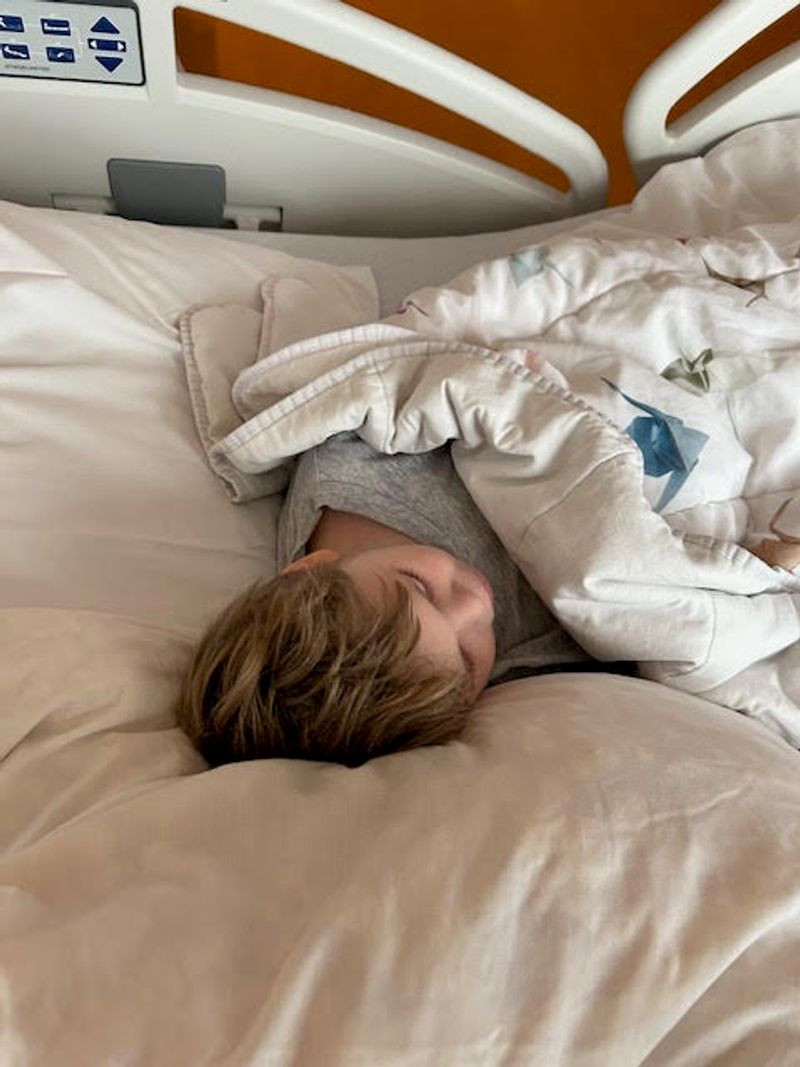
A very difficult, but indeed the best choice for Fabe
Being a foster parent means being 'on' all day for me. I follow the rhythm of (mainly) Fabe. Every few hours, Fabe's portion of tube feeding needs to be started via the feeding pump. In the morning and evening/night, Fabe gets a lot of different medications for epilepsy, among other things, but Fabe also receives an experimental drug to ensure that his blood vessels remain in good condition. And I am there for him when he has an epileptic seizure. At the moment, Fabe still goes to special education in Amsterdam-Zuidoost, but he will soon make the transition to a children's day center in our hometown, close to our house. A very difficult, but the best choice for Fabe. At the children's day center, Fabe can just 'be', and I really wish that for him. Because despite all the limitations, all the setbacks he experiences, Fabe is the most sociable child I know. He is always cheerful, and loves everything and everyone.
For a long time, Felix was unable to speak
Felix is now eleven years old. He was 4.5 years old when he was first severely affected by a stroke in the left hemisphere of his brain. For a long time, he was unable to speak, but with speech therapy and a lot of patience, he started to improve. Felix can no longer use his right hand, and we know that it will not recover. We are now focusing on learning to cope with this disability. Of course, this is easier said than done, as it causes a lot of frustration for Felix. Learning to accept. But Felix finds this very difficult. He has a life before the stroke, and a life after the stroke, and that causes him a lot of pain. But despite the physical limitations, Felix is doing well.
Marly is also increasingly realizing that she is different
Marly is 7 years old and is the only one in our neighborhood to attend regular education. Marly has Shwachman-Diamond Syndrome, which for her is primarily evident in her poor growth. She also has more difficulty learning and more problems with her gross motor skills compared to her peers. For example, it took her a long time to get her swimming diplomas, and she has only recently started riding her bike without training wheels. Compared to her brothers, these issues may seem insignificant, but even these minor limitations affect a child (and me). Because as Marly gets older, she increasingly realizes that she is different from her classmates and friends.
Shared parenting is more than just caring
From now on, I want to give you a monthly insight into the developments within our family. How are the boys and Marly doing? What do we experience? But also: what challenges do we face as caregiving parents? What I have written in this introductory blog is just the tip of the iceberg. Because being a caregiving parent is more than just caring. It also means: living with assistive devices at home, numerous hospital visits, writing and submitting care requests, consulting with agencies, and constantly proving that your child is entitled to what they need. And then there's also the living loss. The realization that some dreams and things we take for granted will never become reality. The loss of what could have been.
By writing these blogs, I hope not only to provide recognition but also to create openness for the people around me. Being a foster parent is about giving a lot of love, even when it's hard.
TESSA