
Rianne (43): "I make lunch boxes for my daughter (14), is that weird? Should I stop doing that?"
The kitchen table at 07:01 AM
I am Rianne. At 07:01 AM every morning, I open the same drawer. Bread, butter, toppings, fruit, water bottle. Flora's (14) lunchbox is ready. Flora is an only child. No idea if that has anything to do with it. I cut slices, arrange cucumber in fans, put a handful of nuts in a small container that always just won't close. It's routine, but done with love. Flora grabs her bag, says “thanks mom”, and disappears. And every time, just after the front door closes, I think: should I still be doing this at her age of fourteen? I look at the crumbs on the countertop and sweep them away with one motion. And I think: when is love service and when is it a habit we've forgotten to reconsider?
It would be easier to say: “Can you manage on your own?” But then I also hear myself: I like doing it. To give something that nourishes, that cares. But. Flora is no longer a child. She can build excel files for math and work on a test for an entire evening. So why that lunchbox from me? Is this love or habit? And does habit eventually become a hindrance? Maybe I'm mainly protecting myself against the emptiness of the morning. Perhaps it's a way to still be needed.
The day I let her choose
Last week I tried it. “It's your turn today,” I said at breakfast. “Make your own lunch. I'll set everything out.” Flora looked up from her phone, nodded, and got to work. Two sandwiches, 100% peanut butter, an apple, a bottle of water. Done in three minutes. I stood by and had to sit on my hands to not say “how about adding a slice of cucumber?” When it was time for school, she shouted “bye!” and I was left with a feeling that hung somewhere between pride and redundancy. It didn't actually feel good at all.
That afternoon she came home and said, “Mom, it was fine. But tomorrow I want ‘your’ egg sandwich again.” Fair is fair. That felt so good. I heard what she was saying: she can do it herself, and she enjoys it when I do it. The answer doesn’t lie readily in between. Because what is the right balance between letting go and showing love? We decided not to make it a principle. We would take it week by week. And we agreed that she would tell us if she prefers to handle it herself from now on.
When does helping become patronizing?
I grew up with mothers who took charge. Bags packed, papers signed, sandwiches made until you dashed out the door. It was love in the form of action. But Flora is fourteen. She learns, she cycles alone, she makes choices where I'm not always present. I don't want to be a mother who holds on too tightly out of habit. At the same time, I don't want to stand back and shout that independence is important, while she goes through the day on an empty stomach.
I try to remember what it was like for me at that age. I wanted to be free, but also to be affirmed. The truth is dull. Flora is allowed to learn to take care of her own food. And my prepared lunchbox is not a crime, as long as I don't take over everything. So I gradually move along. Three days a week she spreads. Two days I do it. And those are the busy days.
What does go into that drum (and why)
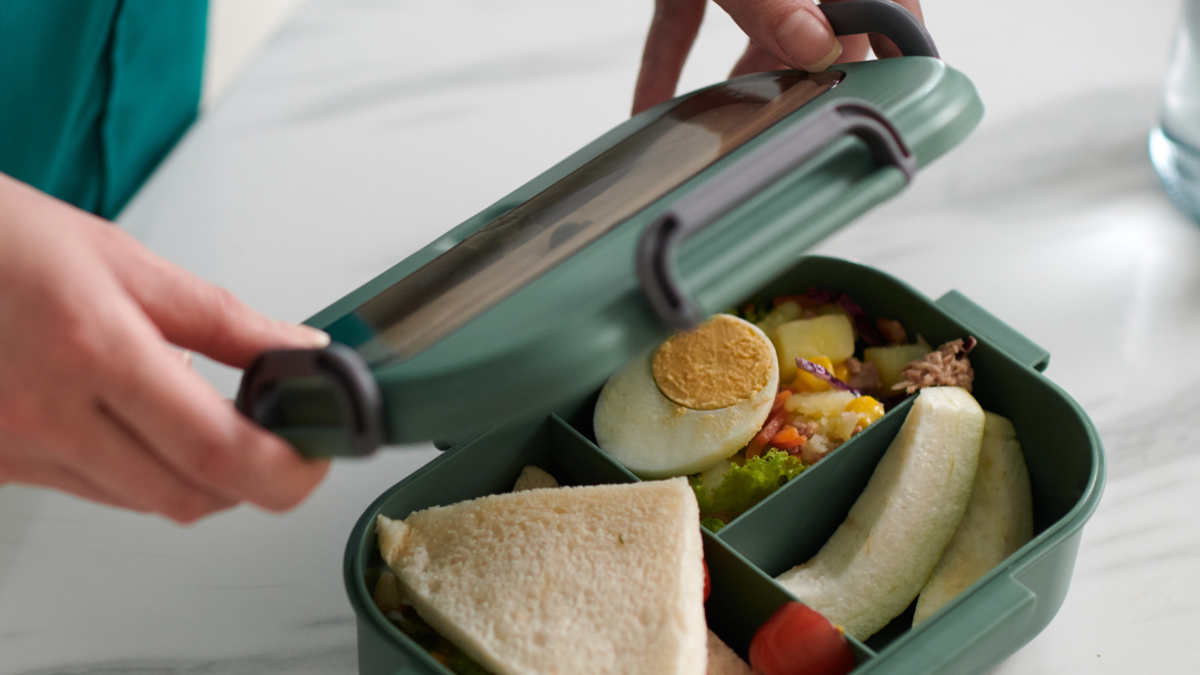
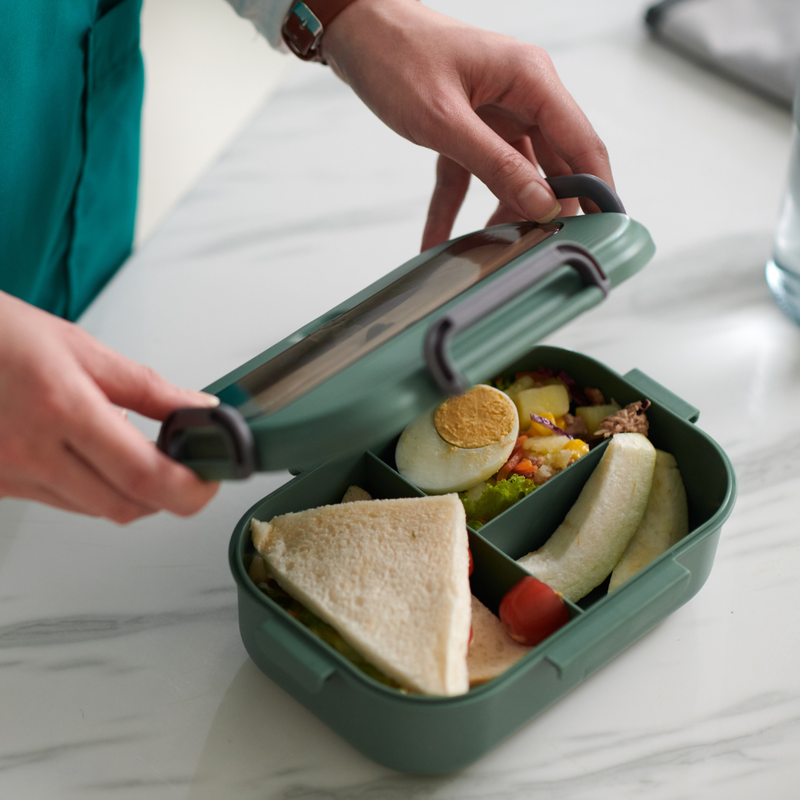
I'm not a nutrition guru. I keep it simple: whole grain or brown bread, something with egg/chicken breast/cheese or 100% peanut butter, take some vegetables or fruit (cucumber, bell pepper, carrot, apple, pear), and water. In a side pocket, a handful of nuts or a small bowl of yogurt if we're early. And sometimes - rarely and intentionally - something sweet: two squares of dark chocolate or a cookie with a note. “Good luck with biology.” A small gesture, big impact. On test days, I make it a bit more special. The supermarket near school is always open. She can always get something from there, within reason. So I make sure the basics are good. And if she gets a croissant with friends, that's okay.
About energy drinks and other quick profits
We have one clear agreement on this: no energy drinks, not in the lunchbox and not before school. We discussed it without drama. Why not, what does it do to your body, and what's a better alternative when she's feeling sluggish (water, fruit, an extra sandwich, or even chocolate milk if necessary). I don't want a ban without explanation. Flora understands, and if something goes wrong, I'd rather talk than lock up the entire cupboard. We also agreed that she'll call me if she feels unwell. Better to be on the line too early than too late. And sometimes an extra sandwich is simply the best hack.
What I learned: teenagers listen more often to reasons than to rules. If the reason is sound and the rule is achievable, they'll participate. I remain the parent who suggests, not the police who enforces. I ask “what works for you?” more often than “why did you do that?”. The conversation sticks much better that way. Big tip from me!
Doing it yourself is impressive
There's something beautiful about a child taking care of their own things. The first morning Flora had her drum ready by herself, she was proud. It's subtle, but visible. As if she's saying, 'I got this.' That's the feeling I want to give her. Not by shouting that she can do it, but by creating moments where she actually does it. The drum is just a small example of that. I don't need to applaud to see it. A nod is enough.
“Too childish” or “just sweet”?
I caught myself wondering if that lunchbox is childish. The answer is no, not if I don't use it to do all the thinking for her. The childishness isn't in the bread and cucumber, but in a mother who feels stuck when her child does things on their own. I want the opposite: for Flora to feel free to try things, to make mistakes, and for me to be present without interfering in everything. Love can be quite practical. A sandwich is not a manifesto. It's just a way to say: I'm thinking of you. So yes, sometimes I make an egg sandwich. And no, I don't need to stick a fairy sticker on it. We are past the lunchbox-with-eyes phase. It can just be functional and good. If she spreads her own bread later, I hope she does it that way too. Not perfect, but with care. That's worth more to me than an Instagrammable lunch.
The logistics that nobody sees
Most acts of independence fail due to logistics: no container, no spoon, bread's gone, time's up. So we made three small agreements that are sustainable:
- Reminder on the fridge (bread, spreads, fruit, nuts).
- Drum & bottle out of the bag and onto the counter immediately after school.
- 3 days of applying it myself and 2 days by mom.
We also always have an “emergency kit” with crackers and peanut butter. It saves every forgotten morning.
Money, convenience, and cheap temptations
Flora has her own debit card with a weekly budget. I don't dictate where it should go, but I do let her know when it's gone. She learns faster from insufficient funds at the checkout than from my monologue about 'expensive lunch sandwiches'. At the same time, we make sure there's always enough at home and it's easy to prepare: always bread in the freezer, snack vegetables in a designated spot, and spreads that are a healthier choice. If you want a teenager to do something themselves, you have to make the barrier absurdly low. We also keep change ready for unexpected canteen days. And we leave room for a treat without discussion. This way, money remains a tool, not a battleground.
What I also noticed: shopping together once a week works wonders. She chooses one type of spread and one type of fruit. When it's gone, it's gone. And I see what she really eats, not what I hope she eats. That avoids misunderstandings. We both become more honest because of it.
About letting go and staying close
The lunchbox is a small thing, but it touches on something big: letting go without walking away. I don't want to steer with a harsh voice, but with trust. Saying: “I am here and I believe you can do this.” And if it doesn't work out, we'll look together at what might help next time. Less control, more structure. Less all-at-once, more steps. Sometimes I still fall into regulating. Then I don't justify it, but I notice it. And the next morning, I start anew.
What I would have wanted to tell myself when I was 10
Start transferring responsibilities earlier. Don't suddenly put everything on her when she turns fourteen, but let her handle small tasks from the age of ten: filling a bottle, washing fruit, spreading butter on bread on Saturday mornings. Not because she has to, but because she can. Then fourteen is not a cliff, but a next step. And if you're reading this with a twelve or fifteen-year-old child: it's not too late. You can start today with one small thing. Do it, dear parent.
If it does clash
Sometimes she doesn't want to take anything with her and says she'll pick something up. I then ask: “What, where, how much?” Not to play the cop, but to think ahead. If she comes home in the afternoon with a dry mouth and an empty wallet, that's a lesson. The next day, there's bread again. Sometimes the best parenting is to keep quiet and later ask gently what helped and what didn't. And if she says she's embarrassed by the lunchbox, we swap it for a neutral one. No teddy bears, no pastels, just white or dark green. The lunchbox doesn't need to play a starring role. I do have something against plastic bags. I don't think they're good for the world. We need to get rid of all that disposable plastic.
What I'm going to hold on to
I am committed to thinking together. To basic healthy eating without impossible rules. To three days her, two days me (and very occasionally the other way around). That perfect sandwich I see on Instagram? Let someone else do that. I choose achievable over instaproof. Flora does too.
RIANNE